
Victoria Sponge Cake Recipe – The iconic Victoria Sponge Cake is one of Britain’s most beloved traditional desserts. Named after Queen Victoria, who famously enjoyed a slice of sponge cake with her afternoon tea, this elegant treat has remained a timeless classic for generations.
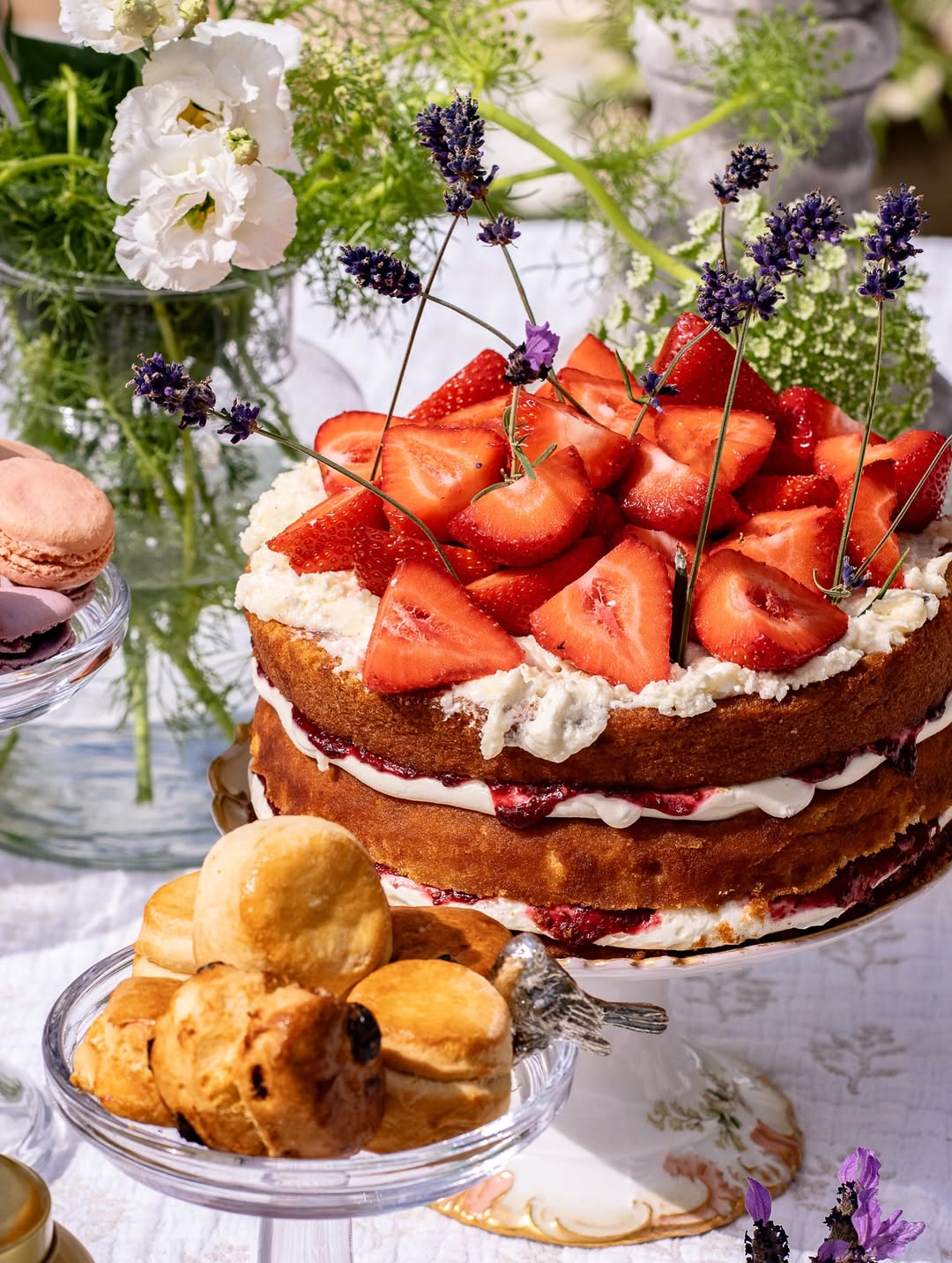
What makes it so special is its perfect balance of flavors and textures—a soft, buttery sponge layered with sweet fruit jam and finished with fresh whipped cream or buttercream. Simple yet indulgent, it is a cake that celebrates quality ingredients, good technique, and pure comfort.
Recipe Overview
-
Cuisine: British
-
Course: Dessert / Tea Cake
-
Servings: 10
-
Calories: Approx. 295 per slice
-
Prep Time: 20 minutes
-
Active Baking Time: 25 minutes
-
Resting/Cooling Time: 1 hour
-
Total Time: 1 hour 45 minutes
Equipment Needed
-
Two 8-inch round cake pans
-
Mixing bowls
-
Hand mixer or stand mixer
-
Spatula
-
Sieve
-
Whisk
-
Parchment paper
-
Cooling rack
-
Offset spatula or spoon
Ingredients
For the Sponge Cake
-
1 cup (225 g) unsalted butter, softened
-
1 cup (225 g) granulated sugar
-
4 large eggs, room temperature
-
1 tsp vanilla extract
-
1½ cups (225 g) self-rising flour
-
1 tsp baking powder
-
2 tbsp milk (optional, for loosening batter)
For the Filling
-
½ – ¾ cup strawberry or raspberry jam
-
1 cup heavy cream (for fresh cream filling)
OR ½ cup butter + 1 cup powdered sugar (for buttercream) -
1 tsp vanilla extract
For Finishing
-
Powdered sugar for dusting
Instructions
1. Prepare Your Baking Pans
-
Preheat the oven to 350°F (175°C).
-
Grease two 8-inch round pans and line the bottoms with parchment paper.
-
Lightly dust the sides with flour for easy release.
2. Cream the Butter and Sugar
-
In a mixing bowl, beat the softened butter and sugar together.
-
Use a hand mixer or stand mixer and beat on medium-high speed for 4–5 minutes.
-
The mixture should become pale, light, and fluffy.
Proper creaming is essential for a lighter sponge texture.
3. Add the Eggs
-
Add the eggs one at a time.
-
Beat well after each addition to prevent curdling.
-
Add vanilla extract and mix again.
If the mixture looks slightly curdled, add 1 tablespoon of flour and continue mixing. This brings it back together smoothly.
4. Incorporate the Dry Ingredients
-
Sift self-rising flour and baking powder.
-
Add the dry mixture to the bowl in two batches.
-
Gently fold the batter using a spatula or on the mixer’s lowest speed.
-
Do not overmix—stop once the flour disappears.
For a softer batter, add 1–2 tablespoons of milk if needed.
5. Divide and Bake
-
Divide the cake batter evenly between the two pans.
-
Smooth the tops with a spatula.
-
Bake for 22–26 minutes until golden.
-
The cake should spring back when lightly pressed.
-
A toothpick inserted in the center should come out clean.
6. Cooling the Sponge
-
Let the cakes rest in their pans for 10 minutes.
-
Run a knife around the edges.
-
Turn the cakes out onto a cooling rack.
-
Peel off the parchment paper and allow the cakes to cool completely for at least 1 hour.
A fully cooled sponge ensures the filling stays firm.
7. Prepare the Filling
Fresh Cream Filling
-
Whip heavy cream with vanilla until thick and spreadable.
-
Do not over-whip to avoid turning it grainy.
8. Assemble the Cake
-
Place one sponge layer on a plate.
-
Spread the jam evenly across the top.
-
Add whipped cream or buttercream over the jam.
-
Gently place the second sponge on top.
-
Dust with powdered sugar generously.
For a neater appearance, keep the top simple—the classic way.
Nutritional Information (Per Serving)
(Approx. 10 servings)
| Nutrient | Amount |
|---|---|
| Calories | 295 |
| Total Fat | 14 g |
| Saturated Fat | 8 g |
| Carbohydrates | 38 g |
| Sugars | 25 g |
| Protein | 4 g |
| Fiber | 1 g |
| Sodium | 170 mg |
Tips for a Perfect Victoria Sponge
1. Use room-temperature ingredients
Cold butter or eggs can prevent proper aeration.
2. Cream butter and sugar thoroughly
This step creates the cake’s signature light texture.
3. Don’t overmix after adding flour
Overmixing can make the cake dense.
4. Weigh ingredients for accuracy
The traditional sponge uses equal weights of butter, sugar, eggs, and flour.
5. Allow the cake to cool completely
A warm cake will melt the cream.
6. Use high-quality jam
A good strawberry or raspberry jam enhances flavor significantly.
Conclusion
The Victoria Sponge Cake is a timeless British classic that blends simplicity with elegance. Its soft crumb, buttery flavor, and sweet jam-and-cream filling make it a cake that appeals to all ages and occasions. With the right technique—especially proper creaming, gentle folding, and accurate baking—you can achieve a bakery-quality sponge right at home. Whether served at afternoon tea, birthdays, or celebrations, this cake always delivers comfort, nostalgia, and delight.
